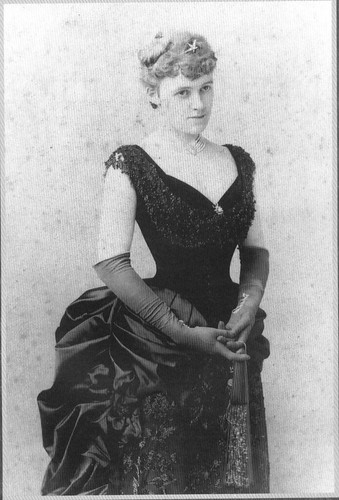
What a shift in the role of a woman from our romp with Jewett in the woods of New England. Wharton was raised a lady of status and primed and cultured to become the wife of a man of status. She did this and lived 28 years in that marriage, according to our bio in the Norton Anthology, to keep up appearances and societal expectations (1696). She also kept her writing excursions practically in secret until she embraced her author career in her late thirties. Her life was lived corseted (both figuratively and literally) by the standards of a woman in that time period.
It is very interesting, then, that this short story would ring with such relevance to the life of even a modern marriage. Set at the advent of the possibility of an independent woman due to divorce, the story addresses the inevitable effects of accruing past relationships.
I found one concept particularly applicable to my own experience in dating relationships. As Mr. Waythorn begins to feel more comfortable with his interactions with his wife's previous husbands he allows himself to think more deeply about the two previous lives she has certainly led. He realized that many of the things which made him love and appreciate his wife had been traits she had honed during her previous relationships. He knew that she was skilled in the "art" of "making a man happy" because she had a lot of practice in it. The text said, "he even tried to trace the source of his obligations, to discriminate between the influences which had combined to produce his domestic happiness" (1708). As he traced these origins, he realized that it was the characteristics that he liked least about his wife's ex-husbands that had resulted in the skills he cherished most in her.
It is easy to be jealous or wary of a current lover's "exes" because anyone would like to think that their lover's heart has only ever belonged to them. But the refinement that occurs during failed relationships cannot be synthesized. I'd like to think that my own adventures in dating are preparing me for the "big race" sometime in the future. When that day does come, with my list of exes, I should be pretty well-versed in the art of "making a man happy". Ha.
 A good follow up to the Yellow Wallpaper, "Trifles" tells the story of a woman's place in country life after the civil war. Accompanying the County Attorney to the scene of the crime are two couples: the sheriff and his wife and the nearest neighbors. The men go about seeking information through empiricism and practicality and actually scoff at the ladies for thinking of things of the heart, like a wasted canning year or a tangled quilting block.